
The Art of Traditional Weaving
The Rebirth of Intergenerational Solidarity
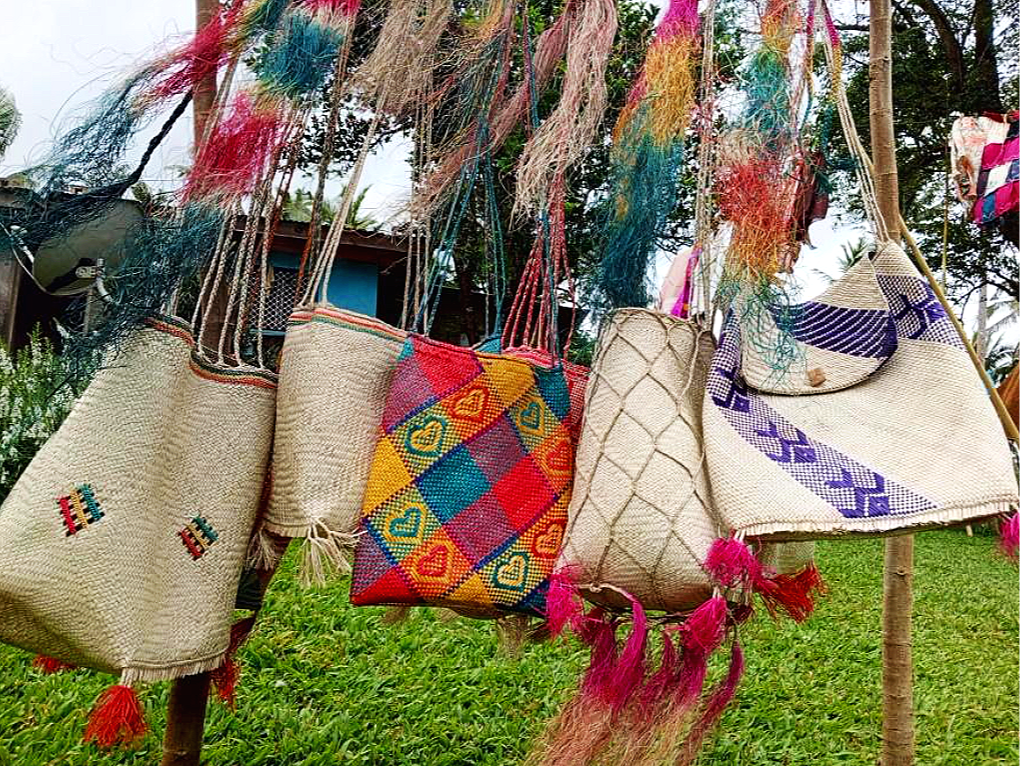
By Martha Fancy Brown, Ulin Maho Association
One of the specific and vital roles of women, amongst other responsibilities, in a village setting, a community, or a home, is weaving, or “Vavatuvwa,” as it is locally known and spoken in the Hano language of North Pentecost. Traditional weaving is part of the livelihood and sovereignty of the people of Pentecost because of its significance in their customs. It is essential to the sustainability of a village community; thus, women play a significant role in society.
Returning to the island for Christmas holidays every year was something I loved because it always felt refreshing to reconnect with the land, the sea, and my family. Both my parents live on the island, so I make it a priority to visit them. However, I also noticed that each year I return, there's always a new change. The most significant changes I see are in diet and young people's interests, and one notable change is women using town shopping bags to carry garden produce back home, or even as baskets, to community events. It saddens me to see this change, but when I ask why, the response is always that women are no longer weaving the traditional “Ghete” that was used as garden baskets to carry food. Later, I learned that this trend is not just in my village but is growing among women in several villages across North and Central Pentecost. Because of this, I began having conversations with others, and we believe the best way forward is to revive the art of weaving.
So, in 2023, we started the Ulin Maho Association, based in Central Pentecost, and developed a project to revive traditional weaving with the women in the North and Central parts of the island. The association recognized the need to empower women’s cultural role in society by providing them with support and space to exchange, maintain, and pass on significant knowledge and skills through generations. What started as a thought developed into a project, and was supported by the Melanesian Women Today (MWT) and the Pacific People’s Partnership (PPP). It was a one-year project developed to reemphasize the cultural significance of traditional weaving, preserve and transfer traditional knowledge and skills, and empower rural women in creativity and art.
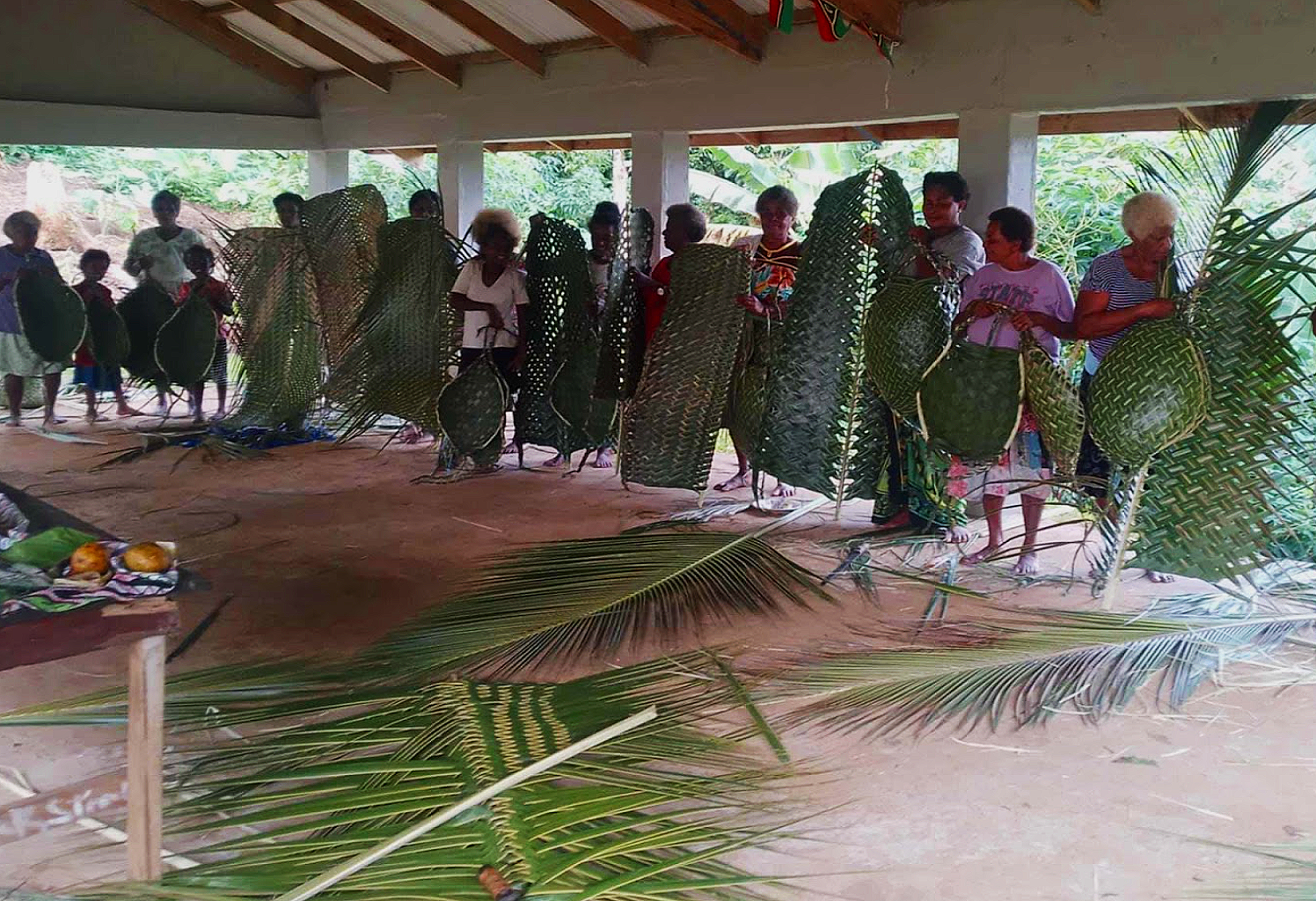
Various arts and crafts involve weaving; however, this first phase of the project involves traditional basket weaving, or “tanga.” Over the course of the project, more than 100 women in five village councils and villages across North and Central Pentecost began weaving again. Women came to realise and reaffirm the importance of traditional weaving as a vital source of income and a value system that gives birth to the unspoken power of women in society. Spaces of knowledge exchange that were once empty are now being revitalized, and a rebirth of stories and values is being shared amongst these powerful women in their places, spaces, and homes. Mothers and daughters reconnect. Girls and women reconnect. A new phase of life and power is blooming amongst this group of women who are sharing their knowledge to maintain this ancient generational knowledge. Each pattern woven tells a story. Each design crafted retells a value.
The unspoken values of society are embedded in the art of traditional weaving, or ‘Vavatuvwa.’ It is not a hobby, as some might see it. It is the real definition of women’s power in a village community. It shapes a woman’s character as she grows up and also reflects the wealth women have within a community or society. When baskets are woven, knowledge is exchanged, and “Alengan vanuanda”—values in a home and in the community — are shared between generations.
A grandmother, when teaching her granddaughter to weave a ‘tanga’ or ‘ebe’ – Mat, also shares stories about the patterns and designs used. These patterns embody values and principles that a girl needs to survive in life. The grandmother or mother imparts essential life lessons to her daughter or granddaughter, encouraging her in her cultural duties and her role in society – in other words, women's empowerment at its simplest.
Therefore, we encourage women worldwide, especially in rural communities in Melanesia and the Pacific, to reconnect and re-engage with their traditional roles in society. These roles are not to be seen as ‘old-fashioned roles’ or ‘backward living,’ but as foundational to women’s place in society. They contain the knowledge systems necessary to protect and sustain the world we live in today.
